How to Start an LLC in Utah: A Step-by-Step Guide
Learn how to start an LLC in Utah, understand the costs and requirements, and get your business established without navigating the process alone.

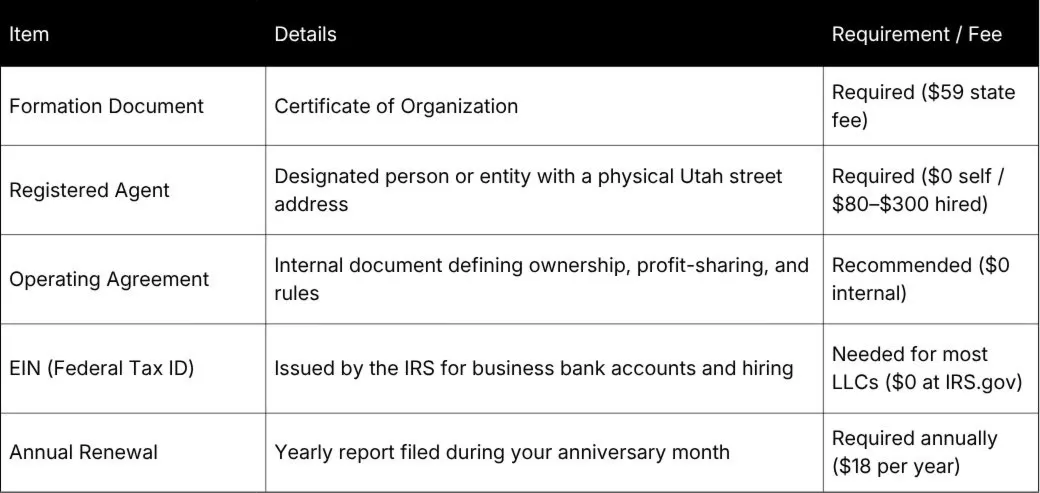
Quick Overview: Items Needed to Start an LLC in Utah
Step 1: Choose a Name for Your LLC
The first step is choosing a name for your Utah LLC. Your business name must be distinguishable from other business names registered with the state and include an appropriate designation, such as “Limited Liability Company,” “LLC,” or “L.L.C.”
Before settling on a name, consider:
- Availability: Make sure the name is distinguishable from existing business names.
- Business identity: Choose a name that reflects your business and is easy for customers to recognize.
- Online presence: Consider whether a matching website domain and social media handles are available.
If you have a name in mind, check your LLC name availability here (opens in a new tab) before moving forward with formation.
Step 2: Appoint a Registered Agent
Every Utah LLC must have a registered agent. A registered agent is the person or business designated to receive official state notices, legal documents, and service of process on behalf of the LLC.
A registered agent must meet Utah's eligibility requirements and maintain a registered office in the state.
You generally have a few options:
- Serve as your own agent: You may be able to serve as your LLC's registered agent if you meet the requirements and can reliably receive documents at the registered office.
- Appoint another eligible person or business: You can designate someone else who meets the state's requirements and agrees to serve.
- Use a registered agent service: A professional service like ExecLex can provide a designated point of contact for official documents.
- Connect with a law firm: Some businesses choose a law firm-backed registered agent arrangement for an additional connection to legal support.
Learn more about choosing a registered agent. (opens in a new tab)
Step 3: File Your Certificate of Organization
To officially establish your Utah LLC, you must file a Certificate of Organization with the state.
This filing provides basic information about your business, including:
- The LLC's name
- The registered agent and registered office
- The business's principal address
- Information about the LLC's management
- Other information required by the state
The state filing fee is currently $59.
Once the state accepts the filing, your LLC is officially formed. Keep a copy of the approved formation document with your business records.
If you're ready to get started, begin your LLC formation here (opens in a new tab).
Step 4: Create an Operating Agreement
An operating agreement outlines how your LLC will be managed and how important business decisions will be handled.
Utah does not generally require LLCs to file an operating agreement with the state, but having one is a good way to establish clear expectations and document how the business operates.
An operating agreement commonly addresses:
- Ownership percentages and member contributions
- Roles and responsibilities of members
- How profits and losses are allocated
- How major decisions are made
- What happens when a member leaves or the business closes
Even a single-member LLC can benefit from an operating agreement because it helps document the business's structure and reinforces the separation between the owner and the company.
Step 5: Get an Employer Identification Number (EIN)
An Employer Identification Number (EIN) is a federal tax identification number issued by the IRS. Many LLCs need one to hire employees, open a business bank account, or meet certain tax requirements.
Even if your LLC does not have employees, obtaining an EIN can help keep your personal and business finances separate.
Once your LLC is formed, determine whether your business needs an EIN based on its ownership, tax classification, and plans for operating.
Step 6: Set Up Business Finances and Handle Licensing
After your LLC is formed, take steps to prepare it for normal business operations.
Open a business bank account. Keeping business and personal finances separate makes it easier to track income, expenses, and financial activity.
Determine your tax obligations. Your LLC's tax responsibilities depend on its ownership and tax classification. You may need to register for applicable state or federal taxes.
Check licensing requirements. Depending on your industry and where you operate, you may need state, local, or professional licenses and permits.
Consider business insurance. Depending on the nature of your work, insurance may help protect your business from certain risks.
These responsibilities are separate from forming your LLC. Filing a Certificate of Organization does not automatically establish that your business has every tax registration, license, or permit it needs.
Step 7: Keep Your LLC Organized and in Good Standing
Forming your LLC is the beginning of your business's legal responsibilities, not the end. You'll need to keep certain information current and complete ongoing state requirements.
One important responsibility is filing your Utah annual renewal. Utah LLCs must submit an annual renewal and pay the applicable $18 fee to maintain their registration. The renewal is generally due by the last day of the month in which the LLC was originally registered.
You should also keep track of:
- Changes to your registered agent or registered office
- Updates to your business address or management information
- Important formation and ownership documents
- State notices and other official correspondence
- Important business obligations and deadlines
Keeping these details organized can make it easier to stay on top of your responsibilities as your business grows.
Keeping things organized with ExecLex: ExecLex provides a centralized place to organize business information, connect with a law-firm-backed registered agent, and keep track of important entity details and compliance responsibilities. Instead of relying on scattered documents, emails, and calendar reminders, you can keep more of your business information together.